A Period-Appropriate Kitchen for a Classic Home
A representative Full Custom kitchen remodel for a historic Palo Alto home — book-matched marble, furniture-style cabinetry, and a design that reads as original to the house.
This case study illustrates typical scope, materials, and approach for this type of project — not a specific, verified job.
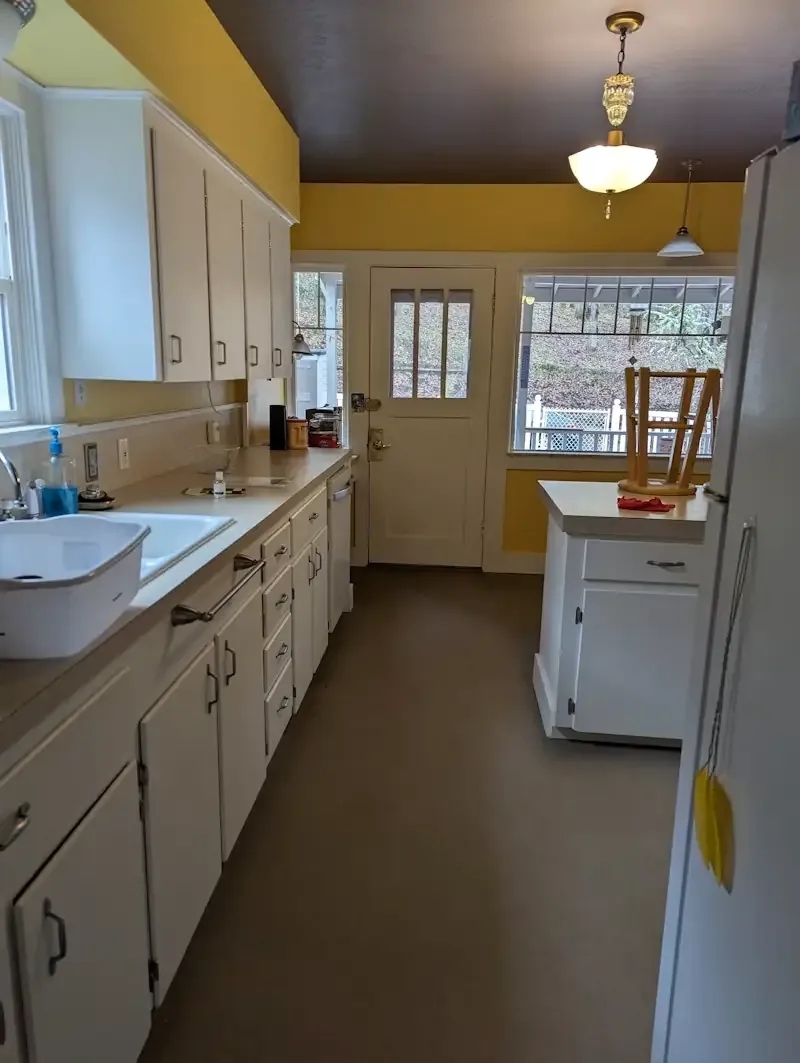
Before
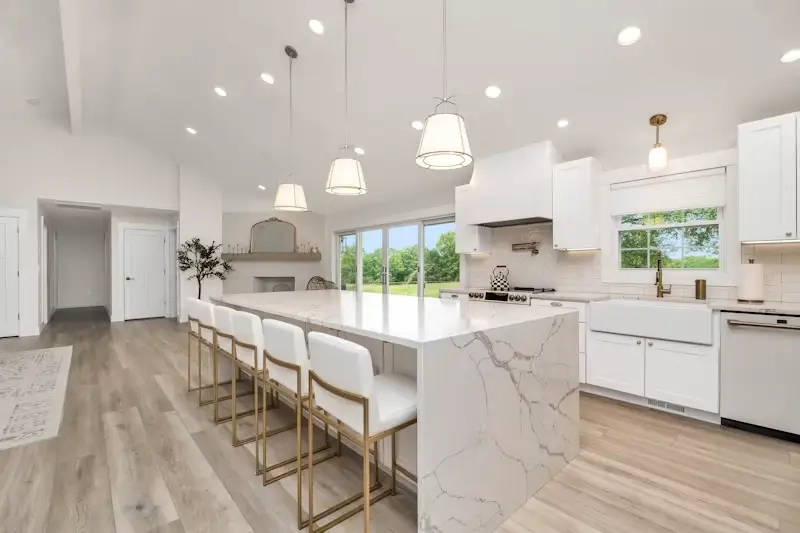
After
The Brief
This project profile represents the kind of remodel we take on regularly in Professorville, Old Palo Alto, and Crescent Park: a kitchen inside a conventionally framed home built well before open-concept layouts were standard, where the owner wants a full custom kitchen that feels like it belongs in the house rather than a modern insertion bolted onto it.
The Approach
Unlike an Eichler, a historic-district home isn’t built on a slab with radiant heat cast into the floor, and it isn’t carried by a post-and-beam grid — it’s conventional stick framing, which generally means more structural flexibility for a kitchen remodel: removing a wall typically just needs a standard engineered header, not a design worked around a fixed grid.
The real constraint on a project like this is design review, and it applies narrowly: only to work that’s visible from the street. Professorville is a formal historic district under Palo Alto’s municipal code, and parts of Old Palo Alto and Crescent Park carry similar considerations — a new window, an altered roofline, or an addition can trigger review, but interior-only kitchen work generally proceeds on the standard permit timeline with no added layer. Confirming which category a specific project falls into is one of the first things we scope, before any design work starts.
Materials & Finishes
Full custom cabinetry with furniture-style detailing — inset doors, period-appropriate hardware, and proportions matched to the home’s existing millwork — is what keeps a kitchen like this from reading as an obvious remodel. A book-matched marble or quartzite waterfall island is a common focal point at this tier; see the Countertops guide for how that compares to quartz on durability and maintenance. Cabinetry choices are covered in full on the Custom Cabinetry guide.
Frequently Asked Questions
Does a historic Palo Alto home need special approval for a kitchen remodel?
Only if the work changes anything visible from the street — a new window, an altered roofline, or an addition. Interior-only kitchen work in Professorville, Old Palo Alto, or Crescent Park generally follows the standard permit process with no added design-review layer.
What makes cabinetry “furniture-style,” and why does it matter in a historic home?
Furniture-style cabinetry uses inset door construction, period-appropriate hardware, and proportions sized to match a home’s existing millwork, rather than standard overlay cabinet doors. It’s what makes a full custom kitchen read as original to the house instead of a visibly modern insertion.
Is a historic-home kitchen remodel more expensive than a standard remodel?
Not inherently — the cost driver is scope and material tier, not the home’s age. A historic Palo Alto home with conventional framing often has more layout flexibility than a slab-on-grade Eichler, since wall removal typically just needs a standard engineered header.
Can a historic kitchen remodel include a marble island?
Yes — book-matched marble or quartzite waterfall islands are common at the Full Custom tier. Natural stone requires more maintenance than engineered quartz; see our Countertops guide for the full comparison.
Project Snapshot
- Location type: Historic district, Palo Alto
- Scope: Full Custom tier
- Typical cost range: $100,000–$250,000
- Typical timeline: 4–6 months
- Key considerations: Exterior-visible design review only, conventional framing, furniture-style detailing
Planning a similar historic-home project?
We’ll confirm whether design review applies to your specific home before you commit to anything.