Kitchen Countertops in Palo Alto, CA
Quartz, granite, and quartzite cover the large majority of countertop choices in Palo Alto kitchen remodels, and each trades off differently on durability, maintenance, and cost. Here’s how they actually compare, what tends to get chosen in Eichler versus traditional homes, and where countertops fit into your overall project budget.
Quick Answer
Quartz is engineered and needs no sealing, making it the default choice for most Palo Alto kitchens. Granite and quartzite are natural stone with more visual variation, but both benefit from periodic sealing — quartzite is the harder and more premium of the two. None of the three interacts with an Eichler’s slab or radiant heat system, so material choice there is purely aesthetic.
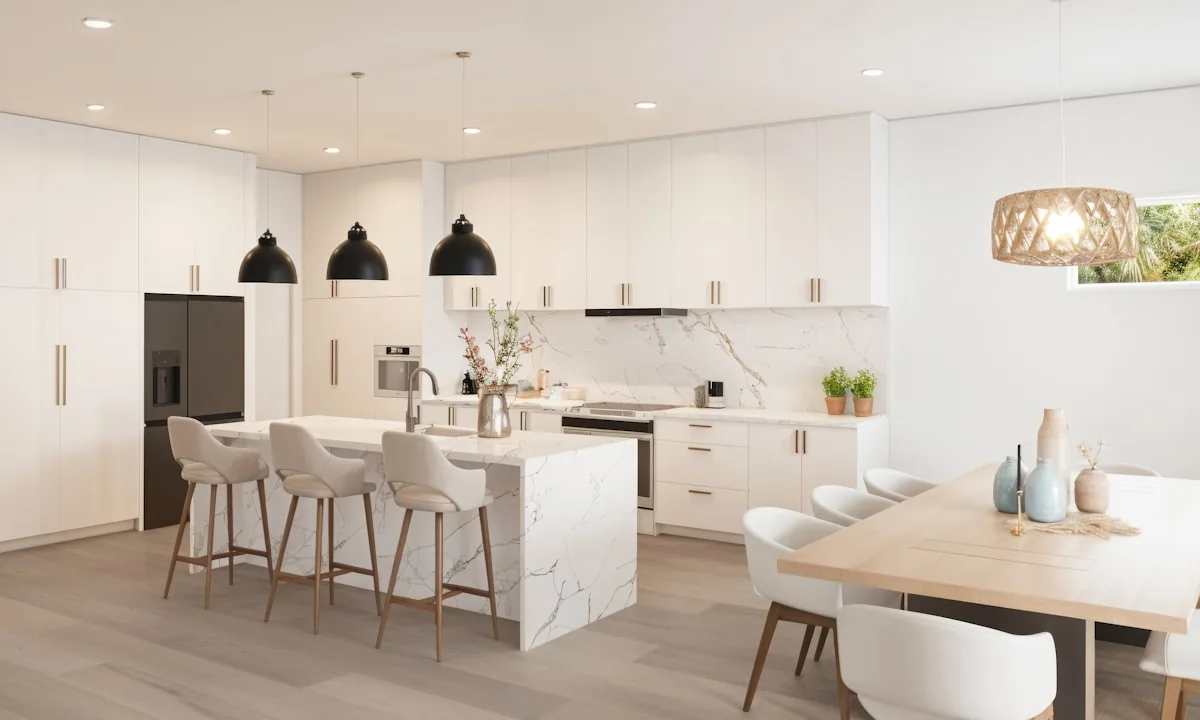
Quartz vs. Granite vs. Quartzite
| Material | Durability | Maintenance | Look | Typical Cost Tier |
|---|---|---|---|---|
| Quartz (engineered) | Very high — non-porous, resists staining and chipping | Low — no sealing required | Consistent pattern, wide color range | Mid-range to premium |
| Granite (natural stone) | High — durable but can chip at edges | Periodic sealing recommended | Natural variation, unique per slab | Mid-range to premium |
| Quartzite (natural stone) | Very high — harder than granite | Periodic sealing recommended | Marble-like veining with more durability than actual marble | Premium |
Quartz is engineered, which means consistent color and pattern batch to batch — useful if you’re matching an island to perimeter counters exactly. Granite and quartzite are natural stone, which means every slab is genuinely unique, but also means seeing the actual slab (not just a sample chip) before fabrication matters more.
What Palo Alto Homeowners Are Choosing
Quartz has become the default choice for kitchens prioritizing low maintenance and consistent appearance, particularly in Mid-Range and Full Custom tier remodels where a large island run needs to match without visible seams standing out. Quartzite shows up more often in Luxury tier projects, where a book-matched natural stone look is part of the design intent and the higher maintenance requirement is an acceptable tradeoff for the material itself. This tracks with the broader 2026 industry data too — see our 2026 Kitchen Design Trends guide for exactly how quartz and quartzite compare nationally.
Countertops in Eichler Kitchens
Mid-century Eichler kitchens tend to favor honed (matte) finishes over polished/glossy stone, which fits the understated material palette common to the style, and waterfall-edge islands — where the countertop material wraps down the side panel in a continuous piece — have become a common way to add a contemporary touch without conflicting with the home’s original architecture. Material choice here is aesthetic, not structural — countertop selection doesn’t interact with the slab or radiant heat system discussed on the Eichler Kitchen Remodel guide. If you go with a natural stone like granite or quartzite, the Natural Stone Institute publishes care and sealing guidance worth following regardless of which fabricator you use.
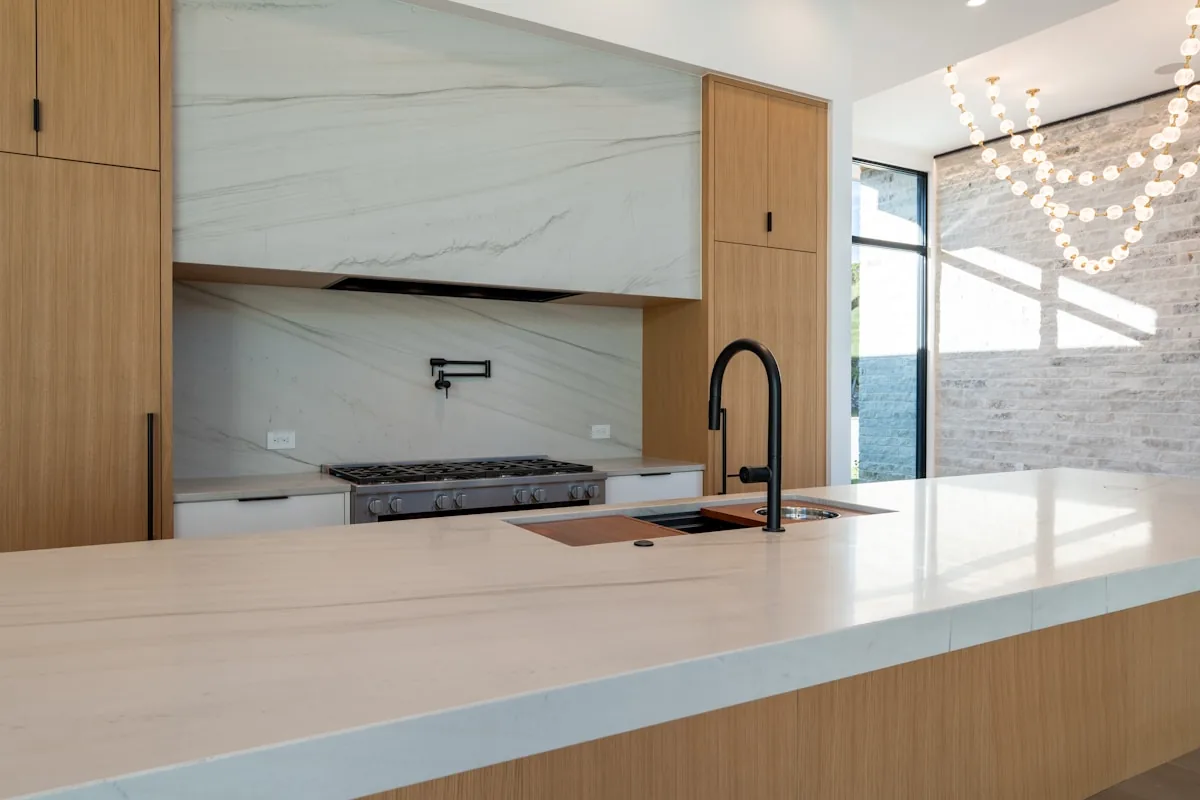
Backsplash Pairings
- Full-height stone slab backsplash — matches the countertop material for a continuous look, common in Full Custom and Luxury tier projects
- Subway tile — a lower-cost, classic option that works in both traditional and mid-century kitchens depending on tile size and grout choice
- Large-format porcelain or ceramic tile — fewer grout lines, a cleaner look that pairs well with quartz counters
- Glass tile — reflective, often used as an accent rather than full coverage
Countertop Cost and Installation Timeline
Countertop material and edge profile are one of the more significant swing factors within a given tier on our Cost Guide — moving from a standard laminate or basic quartz to a premium quartzite slab can shift a Mid-Range project noticeably higher within its range. Fabrication and installation typically run separately from the rest of construction, since templating has to happen after cabinets are set but before final installation — this sequencing is usually built into the overall project timeline rather than adding time on top of it.
Countertop replacement alone, with no layout or plumbing changes, generally doesn’t require a permit. See the Permits guide for the full breakdown of what does.
Frequently Asked Questions
What’s the most durable kitchen countertop material?
Quartz and quartzite are both very durable — quartz because it’s non-porous and engineered for consistency, quartzite because it’s a naturally harder stone than granite or marble. Granite is also highly durable but slightly more prone to edge chipping than either.
Is quartz or granite better for a Palo Alto kitchen?
Neither is objectively better — quartz requires no sealing and offers consistent pattern matching, which suits large island runs; granite offers unique natural variation and pairs well with more traditional kitchen styling. The right choice depends on maintenance preference and the look you’re after.
How long does countertop installation take?
Templating happens after cabinets are installed, followed by off-site fabrication (longer for natural stone than engineered quartz) and then installation, which itself typically takes a day. This is usually sequenced within the overall project timeline rather than adding significant time to it.
Do countertops need a permit in Palo Alto?
Countertop replacement alone, without layout or plumbing changes, generally doesn’t require a permit. If the project also involves moving a sink or relocating plumbing, that portion of the work does.
How often should granite or quartzite be resealed?
Roughly once a year for most kitchen counters, though it depends on the specific stone’s porosity and how much daily wear the surface gets. A quick water-bead test — splash some on the counter and see if it soaks in within a few minutes — is a simple way to check if a reseal is due. Quartz never needs this since it’s non-porous.
Not sure which material fits your kitchen?
Quartz, granite, or quartzite — we’ll help you weigh durability, maintenance, and budget for your specific project.