Custom Cabinetry in Palo Alto, CA
Cabinetry is usually the single largest line item in a kitchen remodel budget, and it’s also where “custom” gets used loosely enough to mean three different things depending on who’s quoting you. Here’s what semi-custom and full-custom actually mean, what fits Palo Alto’s two main housing types, and when replacing your cabinets isn’t actually the right call.
Quick Answer
Semi-custom cabinets modify standard box sizes and cost less; full-custom builds every dimension to your layout and costs more, but matters most for non-standard spaces like an Eichler’s post-and-beam grid or an older traditional home. If your existing boxes are structurally sound and you’re keeping the same layout, repainting or refacing is almost always the better value than full replacement.
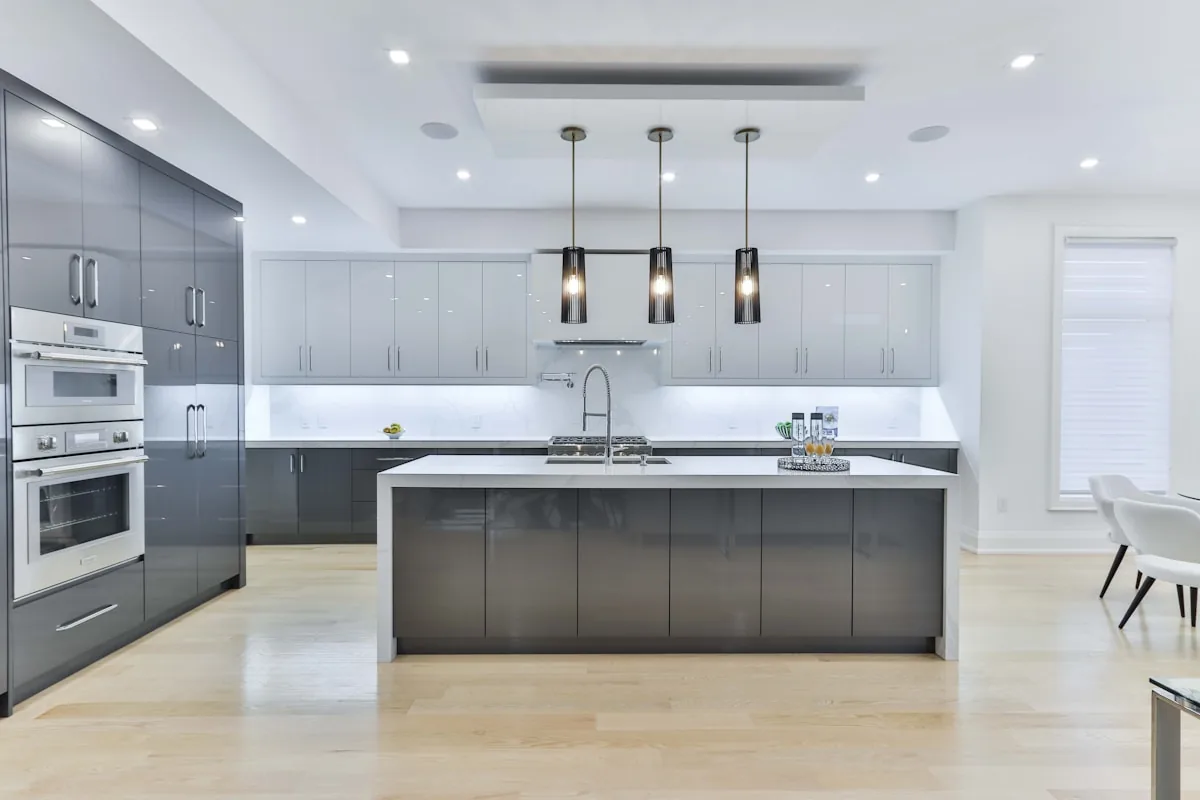
Semi-Custom vs. Full-Custom Cabinets
Semi-custom cabinets start from manufacturer-standard box sizes and door styles, with modifications for specific dimensions, finishes, and storage inserts. They cost less than full-custom, have shorter lead times, and cover the large majority of kitchens — including most of the Mid-Range tier on our Cost Guide.
Full-custom cabinets are built to exact specifications with no standard-size constraints — every dimension, every panel, every interior fitting made for your specific layout. This matters most when a kitchen has non-standard dimensions or an unusual layout constraint, which is common in both Eichler homes and some of Palo Alto’s older traditional houses.
Neither option is inherently “better” — the right call depends on whether your layout actually needs full-custom flexibility or whether semi-custom with the right modifications gets you the same result for less.
Wood-grain finishes and flat-slab door fronts are both trending up industry-wide for 2026 — see our 2026 Kitchen Design Trends guide for how that plays out differently in an Eichler versus a traditional Palo Alto home.
Cabinetry in Eichler Homes
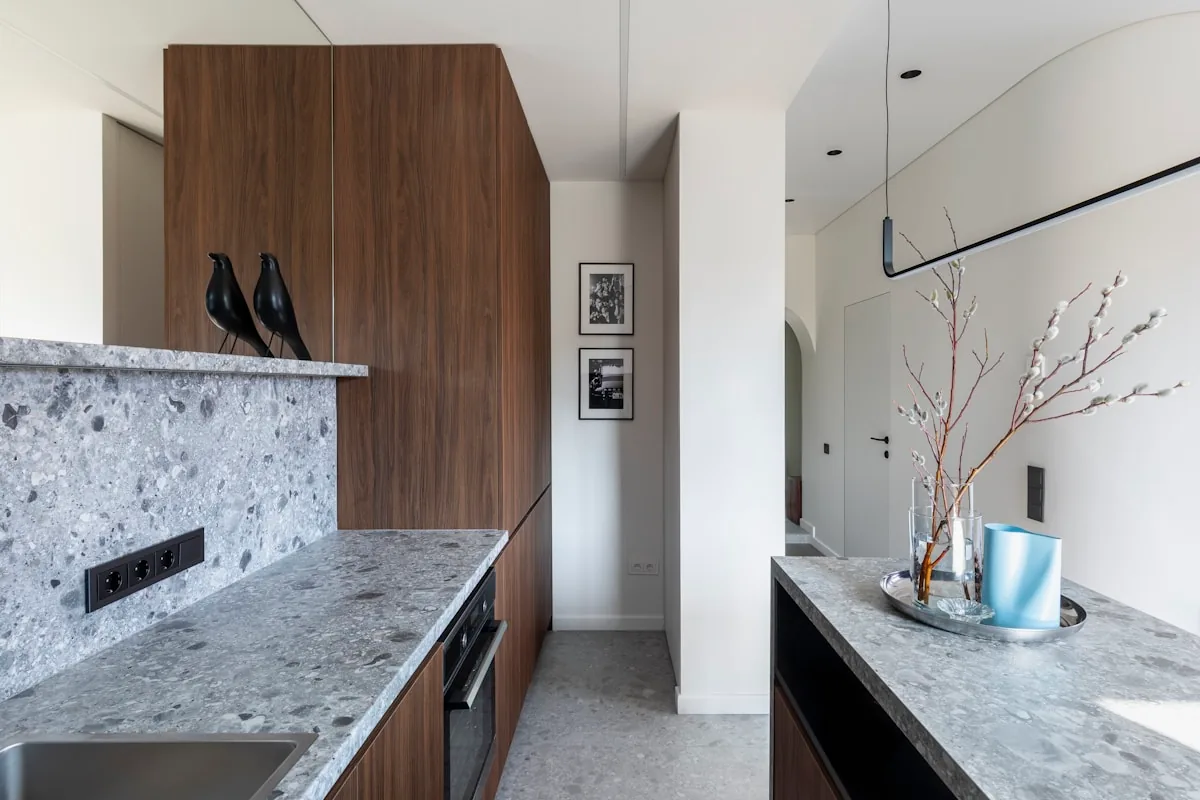
Eichler kitchens sit inside a fixed post-and-beam structural grid, typically on 4-foot or 8-foot module spacing depending on the tract. Cabinet runs that ignore that grid can end up fighting a post or beam mid-installation — something that should get caught at the design stage, not discovered during install. We check post spacing against the proposed cabinet layout before anything is ordered.
Mid-century Eichler kitchens also tend to favor flat-panel or slab-front doors, often in wood veneer or a matte finish, over the more ornate profiles common in traditional homes — a look that works with the post-and-beam architecture rather than against it. Full technical detail on what else is different about an Eichler kitchen: Eichler Kitchen Remodel guide →
Cabinetry in Traditional and Historic Palo Alto Homes
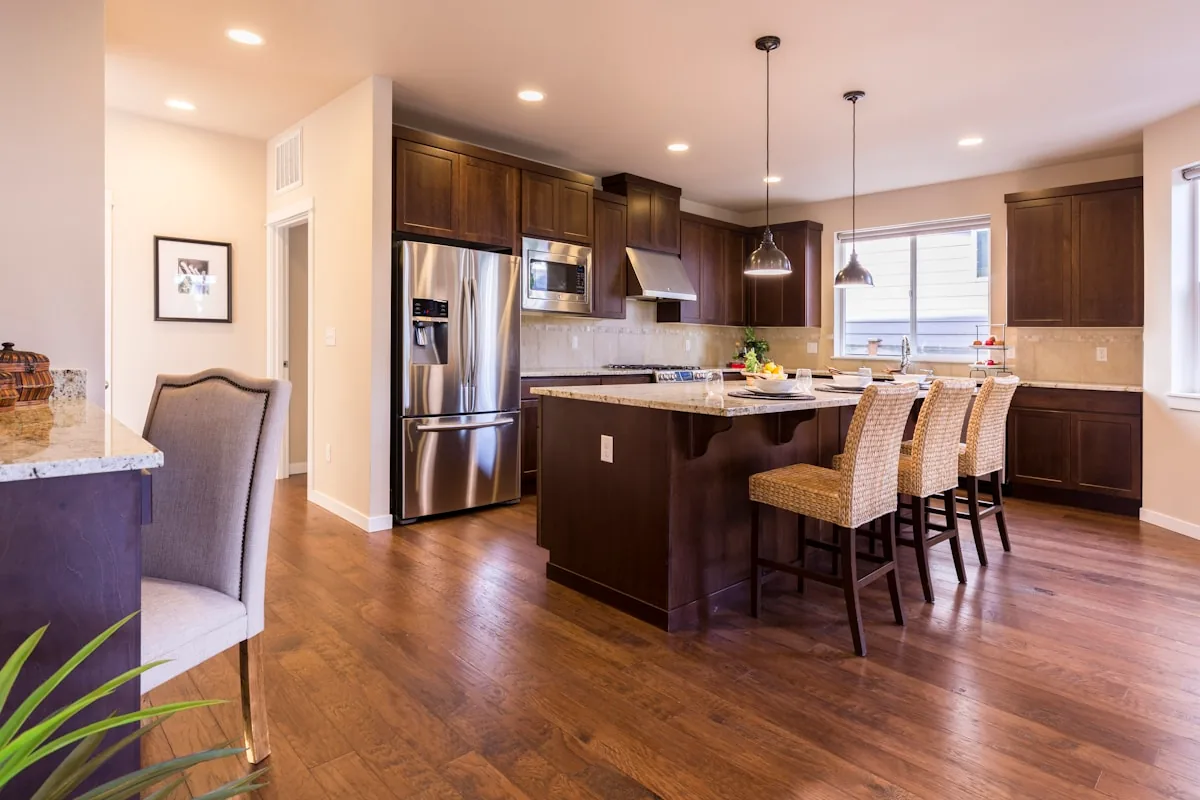
In Old Palo Alto, Crescent Park, and Professorville, kitchens sit inside older, more conventionally framed homes, and cabinetry choices tend to lean toward styles that match the home’s original period detailing — shaker profiles, painted finishes, and furniture-style elements like glass-front uppers or a built-in hutch are common requests. If your project changes anything visible from the street — new windows, an addition — check the Permits guide for whether historic-district review applies; interior cabinetry work on its own generally doesn’t trigger it.
Should You Repaint or Replace Your Cabinets?
This is one of the most common questions we get, and the honest answer depends on the cabinet boxes, not the doors. Boxes built to the Kitchen Cabinet Manufacturers Association’s ANSI/KCMA A161.1 durability standard hold up well enough that refacing is often the better call over full replacement:
Repaint (or reface) if:
- The cabinet boxes are structurally sound — no water damage, warping, or loose joinery
- You’re happy with the current layout and don’t need to change storage configuration
- Budget is the primary constraint — refacing or repainting runs a fraction of full replacement
Replace if:
- You’re changing the layout, adding an island, or reconfiguring storage
- The boxes show water damage, particleboard swelling, or structural wear
- You want different box depths, heights, or interior configurations that refacing can’t achieve
A straight repaint or reface job is cosmetic work and generally doesn’t require a permit; full replacement that changes layout or requires new plumbing/electrical routing does. See the Permits guide for the full breakdown of what triggers permit requirements.
Storage and Layout Add-Ons
- Pull-out shelving and drawer organizers for lower cabinets
- Corner storage solutions (lazy susans, diagonal corner units)
- Built-in pantry cabinets and tall storage columns
- Island storage — both closed cabinetry and open shelving
- Soft-close hinges and drawer glides as a standard upgrade on most new cabinet orders
Frequently Asked Questions
How much do custom cabinets cost in Palo Alto?
Cabinetry cost depends heavily on semi-custom vs. full-custom and the finish level chosen, and it’s typically the largest single line item within whichever tier your project falls into on our Cost Guide — from Mid-Range semi-custom work through Full Custom and Luxury tier full-custom builds.
Is it better to repaint or replace kitchen cabinets?
If the cabinet boxes are structurally sound and you’re not changing the layout, repainting or refacing is almost always the more cost-effective choice. Replacement makes sense when you’re reconfiguring storage, changing the layout, or the boxes themselves show water damage or structural wear.
How long does custom cabinet installation take?
Semi-custom cabinets typically have shorter lead times than full-custom, which can take several weeks longer to fabricate given the made-to-order nature of every component. Installation itself usually takes a few days once cabinets arrive on-site, separate from fabrication lead time.
Can cabinets be designed around an Eichler’s post-and-beam spacing?
Yes — this is one of the most common design adjustments we make. Post and beam locations get mapped against the proposed cabinet run before ordering, so the layout works with the structural grid instead of running into it mid-install.
What does KCMA-certified mean for cabinet quality?
It means the cabinet boxes passed the Kitchen Cabinet Manufacturers Association’s ANSI/KCMA A161.1 testing for structural durability — door and drawer cycling, joint strength, and finish adhesion. It’s a useful, independent way to compare box quality across semi-custom and full-custom options, separate from door style or finish.
Ready to talk through cabinet options?
Semi-custom or full-custom, Eichler grid or traditional layout — we’ll help you figure out which fits your kitchen and your budget.